




Are Stairlifts Safe for Someone with Dementia?
A stairlift can be a safe and helpful option for some people with dementia, but it is not right for everyone, and no stairlift can be guaranteed safe in every situation. Suitability depends on the stage of dementia, the person’s abilities on the day, and the support available at home. That is why the decision should always involve an occupational therapist (OT).
If you are caring for someone with dementia, the stairs can become a daily worry: the fear of a fall, the wish to keep them in their own bedroom and the uncertainty about what comes next. This guide explains how stairlift safety features work, what a key switch does and how to judge whether a stairlift is a realistic solution for the person you care for.
Can a person with dementia use a stairlift?
Yes, some people with dementia can use a stairlift safely, particularly in the early stages, but it is not suitable for everyone and the answer can change over time. Someone who can still follow a simple routine, such as sitting down, fastening the belt, pressing the control and staying seated, may be able to keep using their stairs this way. As dementia progresses, the same routine can become confusing or risky.
NHS guidance states that dementia does not only affect memory; it can also change judgement, balance, vision and how a person judges depth and distance. This is why the person’s abilities on the day matter more than the diagnosis alone. Councils and occupational therapists look at cognitive impairment carefully when deciding whether to recommend a stairlift, although every case is assessed individually. Whether a stairlift is a safe option can also depend on how it will be used, for example only when a carer is present, or operated entirely by a carer. A reputable supplier will discuss this with you at the initial assessment and quotation stage.
What safety features does a stairlift have?
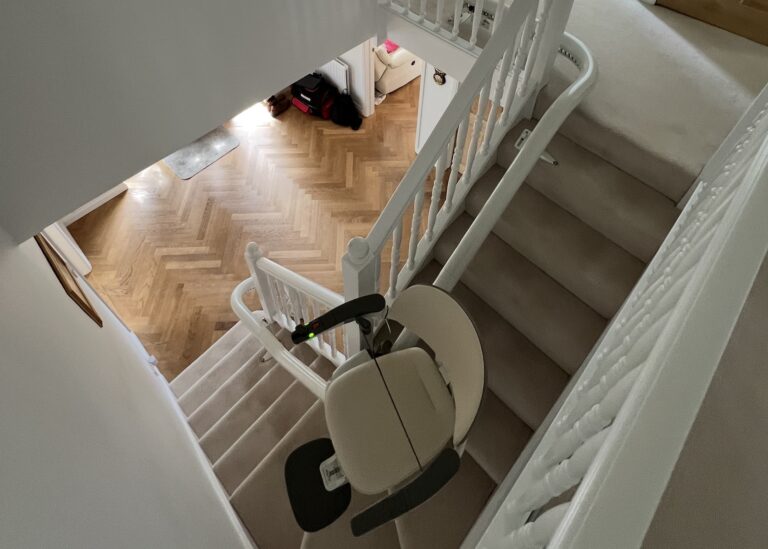
Modern stairlifts include several safety features designed to reduce risk, although none of them replace supervision where it is needed. The main ones are safety sensors, a seatbelt, a powered swivel seat and a key switch.
Safety sensors on the footrest and carriage are designed to stop the stairlift automatically if it touches an object in its path, such as a dropped walking stick. A seatbelt holds the rider in place, and on most models the stairlift will only travel once the seatbelt has been securely fastened. A powered swivel seat turns to face the top landing, typically automatically or with another press of the arm control or remote control button, which makes getting on and off at the top steadier. Reputable stairlifts are designed to meet the safety standard BS EN 81-40.
It is worth being realistic about what these features can and cannot do. Sensors react to obstructions on the track, they cannot judge what a person is about to do, and a seat belt only helps if it stays fastened. For someone who may unfasten it or try to stand mid-ride, a carer’s presence is often the most important safety feature of all. The remote control – or a specific attendant control with a lock button – allows stairlift operation to be completely controlled by whoever is supervising the stairlift user.
Powered swivel seat
Seatbelt
Safety sensor

Can you lock a stairlift?
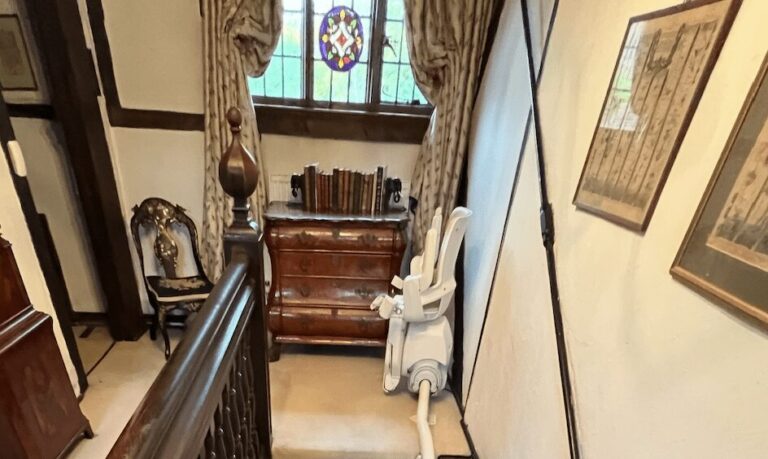
Yes, many stairlift models offer a locking option. However, as most models also have a seat, armrests and footrest that fold away, which keeps the stairs clearer when the stairlift is parked, a locked stairlift does not stop someone from attempting the stairs on foot – so locking is only one part of a wider plan.
An OT can advise on whether other measures are appropriate for your situation. These may include a stair gate to provide a safety barrier near the staircase, or door sensors on access points close to the stairs to provide a warning to others in the home.
What is a key switch on a stairlift?
A key switch is a small, key-operated on/off switch that cuts power to the stairlift’s controls, so it cannot be used unless the key is in place and turned. It is typically fitted to the chair itself, and the key can be removed and kept by the carer. Exactly how it works varies between models, so ask your supplier to show you how it behaves on the stairlift you are considering, including whether the remote controls are also disabled when the key is removed.

For a carer, a key switch works much like a front-door key: it lets you decide when the stairlift is available. One approach is to leave it unlocked only for supervised routines, such as bedtime, and lock it the rest of the time. Not every stairlift includes a key switch as standard, so check this when comparing models. Ask for a spare key too and store both securely.
Will someone with dementia remember how to use a stairlift?
Not always, and it can vary from one day to the next, so it is safest not to assume they will. In the early stages, some people can learn a simple routine through repetition, because familiar habits often last longer than new information. Even then, they may forget the belt, feel anxious about the movement or try to get up before the stairlift has stopped. Some people also find the movement, sound or sensation of a stairlift unsettling, even when they understand what it does. If the person becomes distressed, stop calmly and tell the OT what you noticed, as this is useful information for their assessment.
In the middle stages, many people need a carer to operate the stairlift every time, using the remote control and helping with the transfers at the top and bottom. In later stages, sitting down and standing up can carry more risk than benefit, and alternatives such as moving the bedroom downstairs may be a better fit. Keeping the routine the same each time, using short, calm prompts and never rushing are sensible general habits – but they are not a substitute for an OT’s assessment.
How do you know if a stairlift is right at each stage of dementia?
You can only know through an individual assessment, ideally by an OT, but a few questions can help you start thinking it through. Consider whether the person can:
- follow a simple sequence (sit, fasten the belt, press the control, stay seated) reliably, not just on a good day;
- sit down and stand up safely, with or without help;
- stay seated without trying to stand or unfasten the belt;
- cope with the movement without becoming anxious or distressed.
If any answer is uncertain, seek professional advice before installing a stairlift. It can also help to consider whether it would be used by the person alone, with you beside them or only operated by you.
Why should an occupational therapist be involved?
Because an OT can assess the person’s abilities, the home and the risks together, then advise whether a stairlift or an alternative suits them best. You can reach one through the GP, a hospital consultant or your local authority’s social services team, and the Alzheimer’s Society says everyone has the right to a needs assessment. Although the NHS cannot provide you with a stairlift, it can help you get an OT assessment. If you prefer a private OT, the Royal College of Occupational Therapists can help you find one.
Suitability may need reviewing as needs change, because what works now may not work in six months’ time. You are welcome to contact Kudos Stairlifts to find out more about how the safety features work on each model, alongside your OT’s advice. We are a BHTA member who has supplied more than 5,000 stairlifts over the last 15+ years, and is trusted by several local authorities to provide stairlifts according to OT specifications – so any stairlift solution we recommend is backed by years of accredited expertise and experience.
FAQs
Are stairlifts safe for someone with Alzheimer's disease?
They can be for some people, particularly in the early stages, but no stairlift can be guaranteed safe in every situation. Safety depends on whether the person can follow the routine, stay seated and cope with the movement. An occupational therapist can assess this and advise whether a stairlift or an alternative is appropriate.
Should a person with dementia use a stairlift on their own?
Only if an assessment suggests it is appropriate, and this becomes less likely as dementia progresses. Many people need a carer to operate the stairlift and help with transfers. A key switch can prevent unsupervised use, but it is not a substitute for supervision or professional advice.
What happens if the stairlift hits something?
Safety sensors on the footrest and carriage are designed to stop the stairlift automatically if it touches an obstruction. You can then clear the object and carry on. Sensors cannot judge what a person is about to do, so treat them as one layer of protection rather than a guarantee.
What are the alternatives to a stairlift for someone with dementia?
Depending on the person’s needs, an OT may suggest moving the bedroom or bathroom downstairs, adding handrails, using a through-floor lift or providing other equipment. Our guide explains the alternative options, but the best option depends on the person’s abilities, the layout of the home and the stage of dementia, so professional advice is important.
How do I get an occupational therapist assessment?
Ask the GP or hospital consultant for a referral or contact your local authority’s social services team and request a needs assessment. If you would prefer a private OT, the Royal College of Occupational Therapists can help you find one. Waiting times can vary, so it is worth asking early.
Contact our Client Focus Team today to discuss how a stairlift can improve and protect the quality of life for you and your family.
Choose from a range of industry-leading curved or straight stairlifts, suitable for almost any staircase and expertly installed by our own engineers.
Call us now on 0800 1522400 to arrange your free, no obligation survey and quote, or to ask any questions you may have.