




Do You Need Permission to Fit a Stairlift? Rented, Leasehold and Listed Homes
No planning permission is needed to fit a stairlift in most cases, because it’s treated as an internal, non-structural mobility aid rather than a building alteration. That said, ‘permission’ can mean several different things depending on your circumstances: council planning permission, your landlord’s written consent, or Listed Building Consent if your home has historic protection. Which of these applies to you depends on whether you’re a private tenant, a housing association tenant, a leaseholder, or living in a listed or conservation-area property.
This guide works through each of these situations in turn – private rental, housing association tenancies, leasehold flats, and listed or conservation-area homes – so you know exactly who to ask, and what your rights are, before a stairlift is installed. Understanding the difference between planning permission and simple consent from a landlord or freeholder will save you time and avoid an awkward conversation further down the line. This guide is general information rather than legal advice. If a landlord, freeholder or conservation officer refuses consent, Citizens Advice or a housing solicitor can advise on your particular situation.
Do I need planning permission for a stairlift?
You do not need planning permission for a standard stairlift in the vast majority of UK homes, because it counts as an internal, non-structural mobility aid rather than a building alteration. A stairlift runs on a rail fixed to the stair treads, so fitting one does not involve knocking through walls or altering the property’s external appearance. Under planning law, work that only affects the inside of a building and does not change its outside appearance does not need planning permission, so your local council has no involvement at all.
The main exceptions are listed buildings and shared staircases in flats or maisonettes, each covered in more detail below. Building Regulations are a separate matter from planning permission, but a standard domestic stairlift does not normally need Building Regulations approval either, since it involves no structural work. A good installer will still check practical safety points such as stair width, headroom and whether the stairlift affects your escape route in a fire.
Can I fit a stairlift in a rented house?
Yes, you can fit a stairlift in a rented house, but you will need your landlord’s written consent before any work begins, since most tenancy agreements restrict alterations to the property. This is a private, contractual matter rather than a planning permission issue, and it applies whether you rent through a letting agent or directly from the owner. In practice, this means writing to your landlord or agent, explaining why the stairlift is needed and giving details of the supplier and fitting method.
It helps to reassure your landlord that a stairlift is fixed to the stair treads rather than the walls or structure, and can be removed later leaving only minor, repairable marks. If you are disabled, you also have some legal protection: a landlord should consider a request for a disability-related improvement properly, and if they refuse, they should explain why in writing. They can attach reasonable conditions, such as removal at the end of the tenancy. The exact rules depend on your type of tenancy, so if you are refused, Citizens Advice or Shelter can explain where you stand.
Do I need landlord permission?
Yes – whether you rent privately, from a housing association, or from the council, you need your landlord’s permission before installing a stairlift, because the staircase and structure of the property remain theirs even though you live there. This holds true across private and social rented housing alike, though the process for getting that permission looks a little different in each case.
Housing association and council tenants usually follow a different route: an occupational therapist first assesses your needs, and their recommendation supports a Disabled Facilities Grant (DFG) application to your local council, which can fund some or all of the cost. Some housing associations run their own occupational therapy service rather than going through the council, so check directly with your landlord first. Either way, your landlord’s written consent is still needed alongside the grant application.
Whoever your landlord is, a refusal should not be a blanket one. Landlords, including housing associations and councils, must not discriminate against disabled tenants under the Equality Act 2010, and social landlords usually have their own adaptations policies setting out how requests are handled. If a request is turned down without a clear reason, ask for the decision and the reasons in writing, and seek advice before accepting it.
What if I own a leasehold flat?
If you own a leasehold flat, you will usually need permission from the freeholder or managing agent rather than a landlord, because most leases include a covenant restricting alterations to the property or its common parts. This is separate from planning permission, and applies even though you own the lease outright, since the building’s structure and shared areas legally belong to the freeholder. A written request describing the stairlift and its fixing method is normally the first step, just as it would be for a tenant.
Where the stairlift needs to be fitted on a shared or communal staircase, the freeholder may also need to consult other leaseholders before giving consent, since it affects an area everyone uses. Expect to be asked to cover the cost of the work and of reinstatement if the stairlift is later removed, and to show that it will not obstruct the escape route for other residents. Under most leases consent is at the freeholder’s discretion, so a clear, early request with full fitting details is the best way to get a yes.
What about a listed building?
Even in a listed building, you still won’t usually need planning permission for a stairlift, but you may need Listed Building Consent if the installation affects a staircase or feature of historic or architectural importance. This is worth checking early, since Listed Building Consent is a separate legal process from planning permission and is assessed by your local authority’s conservation team.
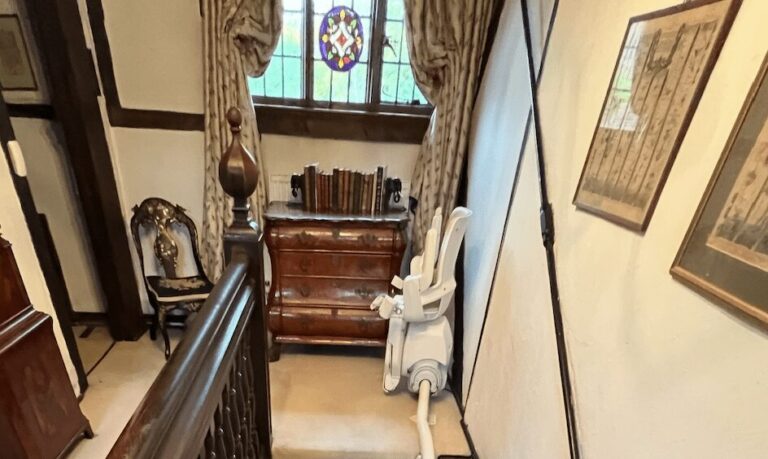
Grade I, Grade II* and Grade II listed buildings are all protected because of their special character, and altering a historic staircase – for example, fixing rail brackets into original oak or stone treads – can count as a material change requiring consent, even though the same job would need no permission in an unlisted home. Most stairlifts can be fitted using low-impact fixings with limited drilling into historic fabric, and suppliers experienced with period properties will usually flag whether consent is likely to apply before work starts.
If your home simply sits within a conservation area but isn’t itself listed, this status mainly restricts external changes to the property. An internal stairlift installation is very unlikely to be affected, though it’s still sensible to mention the conservation area status to your assessor so they can advise if anything unusual applies.
Getting professional advice before you go ahead
It’s worth getting professional advice before committing to a stairlift, particularly if you rent, hold a lease, or live in a listed property. A reputable company can survey your staircase, flag whether any permissions are likely to be needed, and recommend fixing methods that are easiest for a landlord, freeholder or conservation officer to approve. This small extra step at the start can prevent delays, disputes or an awkward removal request later on.
Kudos Stairlifts carries out free home assessments and can talk you through the right approach for rented, leasehold and listed homes before you commit to anything – with our experience backed up by our range of accreditations, including our BHTA membership, our Buy With Confidence (Trading Standards Approved) status, and our Which? Trusted Traders endorsement. Our team can also provide you with the details a landlord, housing association or conservation officer will need to say yes with confidence.
FAQs
Do I need Building Regulations approval to fit a stairlift?
Building Regulations approval isn’t generally required for a standard straight or curved stairlift, since it doesn’t involve structural work. Your supplier should still follow guidelines and carry out a proper risk assessment, checking stair width, headroom and fire escape routes, to make sure the installation is safe.
Can my landlord refuse to let me install a stairlift?
A landlord can attach reasonable conditions, such as removal at the end of the tenancy, but should not refuse without a genuine reason, which they should explain in writing. If you are disabled and think a refusal is unreasonable, Citizens Advice can explain your options for your type of tenancy.
What is a Disabled Facilities Grant, and can it help pay for a stairlift?
A Disabled Facilities Grant (DFG) is a grant from your local council that can help cover the cost of a stairlift once an occupational therapist assesses it as necessary. It is available to homeowners and to private, housing association and council tenants, though tenants still need their landlord’s consent. It is means-tested for adults but not where the disabled person is a child, and the maximum grant in England is £30,000.
Will I need to remove the stairlift when I move out of a rented property?
Possibly. Landlords can make removal and reinstatement of the staircase a condition of giving consent, particularly for private and listed properties. Agree this in writing before installation and ask whether the stairlift could instead stay in place or be removed and reused if a future occupant needs one.
Do I need permission to fit a stairlift on a shared staircase in a flat?
Yes. If the staircase is a communal area shared with other residents, you’ll usually need agreement from the freeholder, management company or fellow leaseholders, not just planning permission. This sits alongside Listed Building Consent, which may also apply if the building itself is listed.
How long does it typically take to get permission to install a stairlift?
Landlord consent for a straightforward case can sometimes be agreed within days if you provide clear details of the supplier and fitting method. Housing association and Disabled Facilities Grant routes usually take longer, often several weeks to a few months, since they typically involve an occupational therapist assessment first.
Contact our Client Focus Team today to discuss how a stairlift can improve and protect the quality of life for you and your family.
Choose from a range of industry-leading curved or straight stairlifts, suitable for almost any staircase and expertly installed by our own engineers.
Call us now on 0800 1522400 to arrange your free, no obligation survey and quote, or to ask any questions you may have.